

15 Feb 2024
In the realm of technological progress, smart buildings stand out as beacons of innovation, promising enhanced efficiency and sustainability. At the core of this revolution lies IoT (Internet of Things) solutions, driving intelligence, responsiveness, and connectivity to unprecedented levels. Through real-time data collection, analysis, and automation, smart building monitoring systems are reshaping facility management, offering numerous benefits for occupants and owners alike.
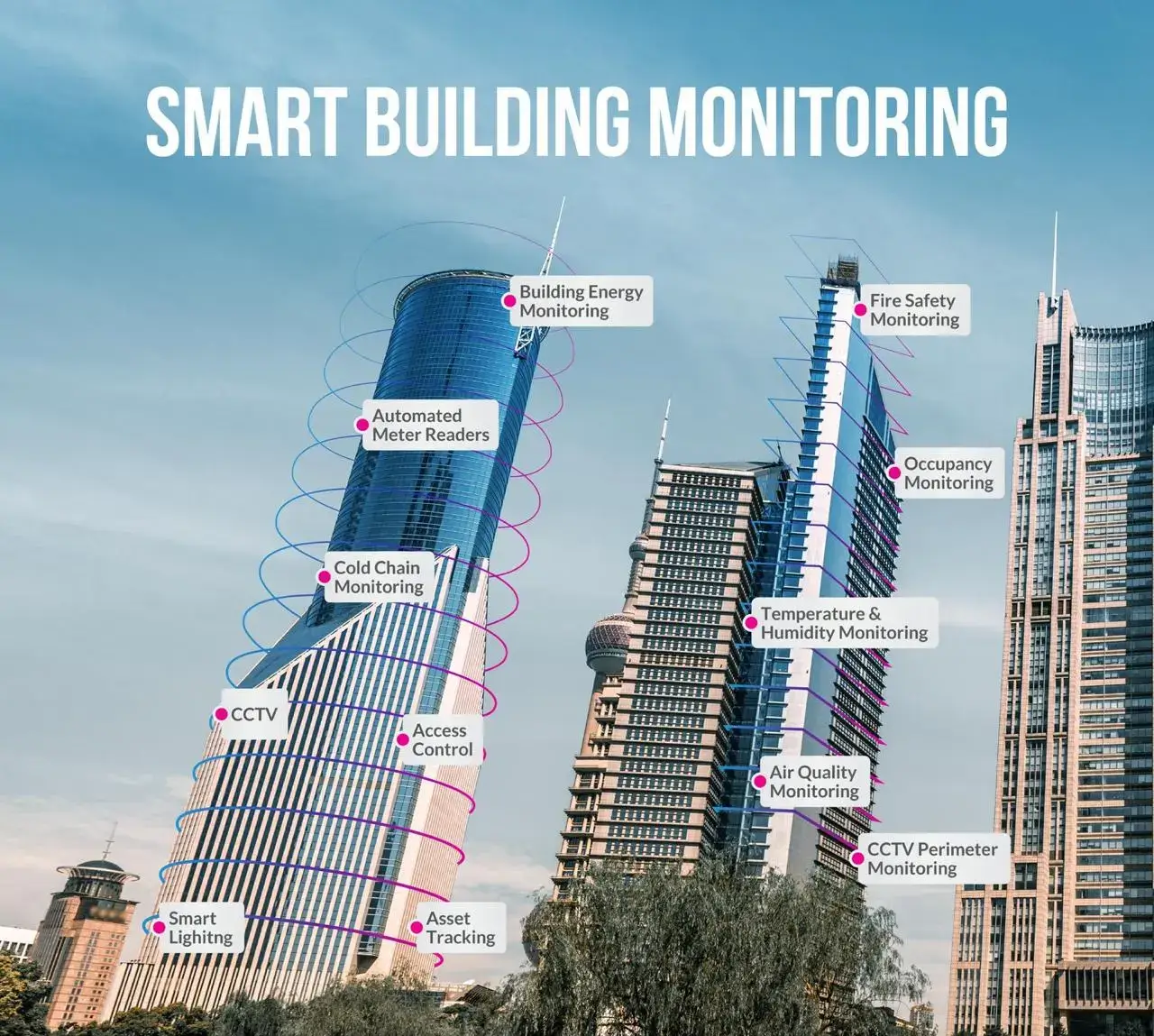
Smart building monitoring integrates IoT devices and sensors to gather and analyse data from various building systems. These systems encompass HVAC, lighting, security, energy management, and more. By consolidating these systems into a unified platform, building managers gain comprehensive visibility and control over their facilities.
Optimized Resource Management: From equipment and HVAC systems to fire safety and legionella monitoring, smart technologies optimize maintenance and compliance, ensuring the highest standards in hospitals.
Efficient Energy and Water Monitoring: Smart energy and water monitoring solutions identify wasted consumption, offering insights for benchmarking and assessing return on investment over time.
Specific: Tailored to individual facility needs, smart building monitoring provides detailed insights into energy consumption, occupancy, equipment performance, and environmental conditions.
Measurable: Continuous monitoring of key performance indicators enables stakeholders to quantify the impact of their actions, fostering informed decision-making.
Actionable: Advanced analytics translate data into actionable insights, identifying trends and optimization opportunities in real-time.
Relevant: Timely and contextually relevant information empowers stakeholders to make informed decisions that enhance performance and sustainability.
Timely: Real-time insights facilitate proactive decision-making and rapid response to changing conditions, maximizing efficiency and minimizing downtime.
As technology advances and IoT adoption grows, smart building monitoring will continue to evolve. From advanced analytics to AI-driven automation, the future holds limitless possibilities for efficiency, sustainability, and innovation.

By embracing the SMART principles and leveraging advanced technologies, stakeholders can unlock new opportunities for optimization and sustainability. For further insights and a complimentary consultation on how to implement smart building solutions tailored to your needs, contact info@technosive.co.uk As we move towards smarter, more resilient buildings, the future looks promising.